Reverse Osmosis Filtration: The Truth About Home Tap Water in 2026
Over the past few years of evaluating residential plumbing infrastructure across the United States, our engineering team at MIZUDO has noticed a disturbing trend. While municipal water facilities generally meet baseline federal safety standards at the plant, the miles of aging underground pipes leading to your neighborhood often tell a completely different story. By the time that water reaches your kitchen faucet, it has likely picked up heavy metals, industrial runoff, and excess chlorine.
We built our advanced manufacturing facility precisely because we saw American families overpaying for basic carbon pitchers that barely scratch the surface of these modern contaminants. Today, we are stripping away the marketing jargon to explore the actual science of deep filtration, giving you the knowledge to confidently upgrade your drinking water system without falling for retail gimmicks.
The Science Behind the Tap: Demystifying the Technology
When homeowners start researching ways to filter home water effectively, they are almost immediately hit with complex terminology. Our support inbox is constantly flooded with the exact same fundamental question: what is reverse osmosis in a water filter?
Think of it as a microscopic security checkpoint. Instead of relying on a simple sponge-like material to catch large dirt particles, this technology uses physics. To truly grasp the value, we have to look at the mechanics and ask, how does a reverse osmosis water filter work? In a high-quality unit, your home's natural water pressure forces tap water through a highly specialized, semi-permeable membrane. The pores on this membrane are rated at 0.0001 microns. Because only pure water molecules are small enough to squeeze through that barrier, everything else gets rejected and flushed down the drain. You are left with a medical-grade water purifier reverse osmosis setup right inside your own kitchen.
What Is Actually Hiding in Your Glass?
Understanding the physical barrier is one thing, but seeing what it actually blocks is where our laboratory testing really opens eyes. After testing samples from various older neighborhoods, the immediate concern for any parent is obvious: what contaminants does a reverse osmosis water filter remove?
The results from our internal quality checks show that this specific membrane technology eliminates up to 99.9% of total dissolved solids. We are talking about aggressive municipal additives like chlorine and chloramines, dangerous heavy metals such as lead and arsenic seeping from old pipes, and even modern threats like microplastics and PFOA/PFOS (forever chemicals). Turning a basic water filter for tap use into a comprehensive barrier means you no longer have to rely on blind trust when pouring a glass of water for your family.
The Health Debate: Purity vs. Hydration
Creating this level of absolute purity naturally changes the way you interact with your water. If you are comparing systems, you are likely trying to pinpoint, what are the benefits of using a reverse osmosis water filter? Beyond the peace of mind regarding contaminants, the immediate change is culinary. Coffee tastes richer, ice cubes freeze crystal clear, and food cooked in purified water retains its natural flavors without the harsh chemical aftertaste of city chlorine.
This aggressive filtration, however, sparks a fascinating biological discussion. We regularly see health-conscious buyers asking, is reverse osmosis water really good for you? Because the membrane is so incredibly effective, it does not discriminate—it removes harmful lead, but it also strips away naturally occurring trace minerals like calcium and magnesium.
This lack of minerals actually answers a very common and specific complaint we observe in online wellness forums, where new users ask: why am I thirsty after drinking reverse osmosis water? When water is entirely devoid of minerals, it can sometimes feel less hydrating or slightly "flat" to the human body. To solve this physiological puzzle, MIZUDO integrates a premium remineralization stage into our systems. After the water is completely purified, we naturally infuse the perfect balance of healthy alkaline minerals back into the flow, ensuring optimal hydration and a crisp, sweet taste.
Navigating the Market: Finding Your Perfect Fit
Once the science makes sense, the decision shifts to practical application in your kitchen. With endless shapes and sizes available, customers frequently ask our engineers, which RO system is best? We always answer that the ideal setup depends entirely on your living situation.
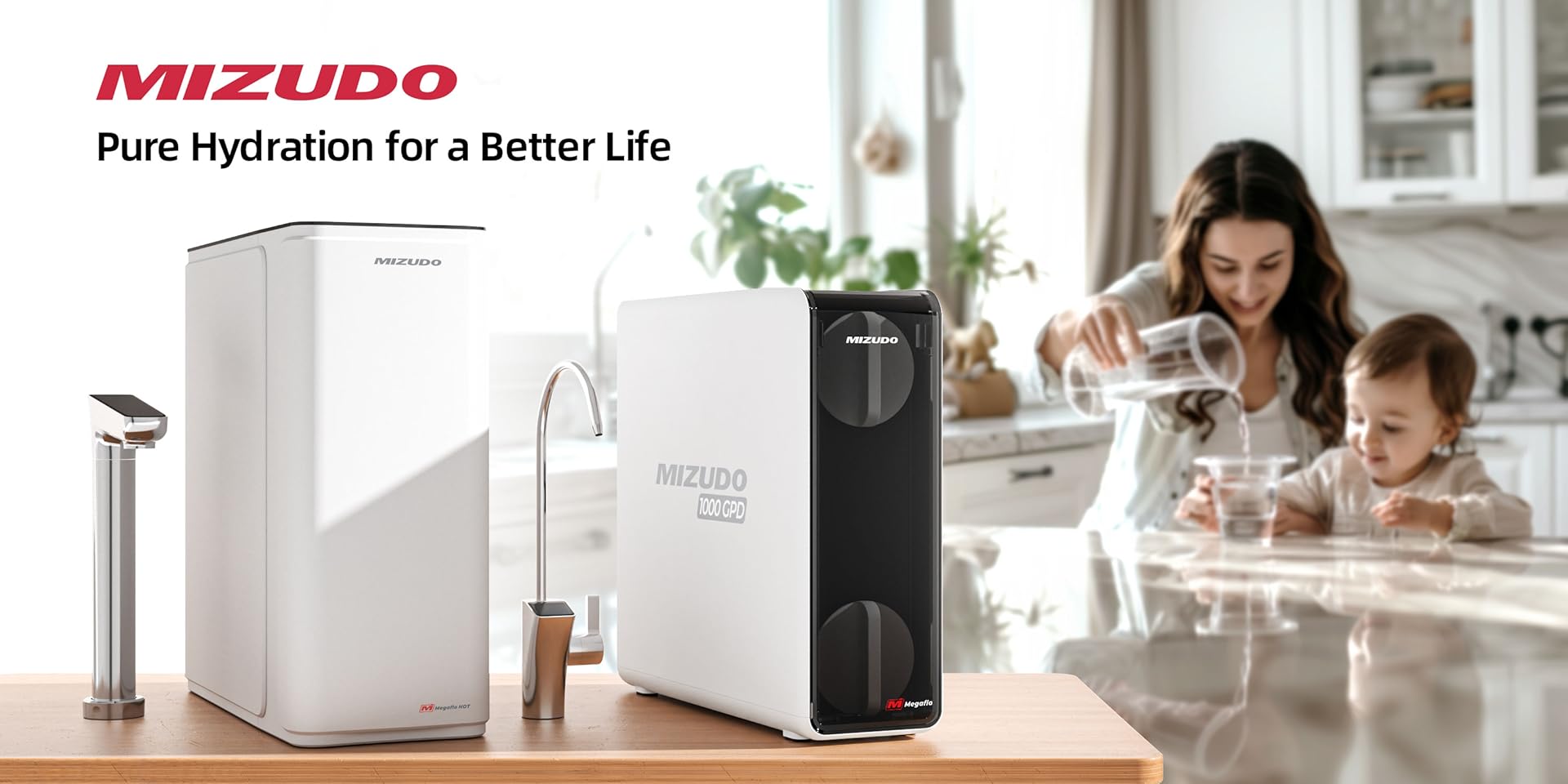
If you own your home, a high-capacity under-sink model serves as the ultimate invisible drinking water purification system for home use. But we know that millions of Americans rent their apartments or simply hate the idea of drilling into a beautiful granite island. For those customers, a Reverse Osmosis Water filter Countertop unit is a game-changer. These sleek, freestanding systems require absolutely no plumbing modifications—you just plug them in, fill the tank, and let our advanced pumps deliver the exact same laboratory-grade purity as our installed models.
Ownership Reality: Lifespan, Upkeep, and Costs
A crucial part of our factory-direct philosophy is being completely transparent about what happens after the sale. When you bring any new appliance into your home, you deserve to know its true longevity. People investigating these systems invariably ask, how long do reverse osmosis water filters last?
Because MIZUDO operates its own production lines, we use commercial-grade housings and heavy-duty internal pumps that are engineered to last well over a decade. However, the filters themselves are working hard to trap debris and must be treated as consumables. That brings us to the operational reality: what are the maintenance requirements for a reverse osmosis water filter?
We intentionally designed our systems to eliminate the need for costly plumber visits. You can expect to swap out the simple twist-and-lock pre-filters every 6 to 12 months to catch large sediment, while the core membrane only needs replacing every 2 to 3 years. Keeping this simple rhythm ensures your filter system water remains pristine and protects the internal mechanics.
Finally, we have to address the financial elephant in the room. If you have been shopping around, you know the average Reverse Osmosis Water Filter price can seem completely arbitrary, ranging from suspiciously cheap plastic units to wildly expensive luxury models. The truth is, many heavily marketed water filter brands rely on third-party factories, massive ad spends, and layers of retail distributors.
At MIZUDO, our business model cuts out that bloat entirely. Because we manufacture our own industry-leading technology, we pass those structural savings directly to the consumer, offering high-end, uncompromising performance at a price point that makes sense for the American household.
Frequently Asked Questions
Does a reverse osmosis system waste a lot of water?
Traditional setups were infamous for wasting up to 4 gallons down the drain for every 1 gallon purified. However, modern MIZUDO units utilize advanced internal pumps and highly efficient membrane designs to drastically improve this recovery ratio, making them far more environmentally friendly than older technology.
Can I install an under-sink RO system myself?
Yes. If you have basic DIY skills and standard plumbing under your sink, installation is very straightforward. Our systems come with color-coded tubing and quick-connect fittings. Of course, if you prefer, any local handyperson or plumber can easily complete the installation in under an hour.
Is reverse osmosis better than a standard refrigerator filter?
Absolutely. Fridge and pitcher filters typically use basic activated carbon, which primarily targets chlorine to improve taste and smell. An RO membrane operates on a much deeper, microscopic level, removing heavy metals, fluoride, forever chemicals (PFAS), and dissolved solids that standard carbon filters completely miss.
Ready to Stop Overpaying for Clean Water?
Don't let retail markups and middlemen stand between your family and laboratory-grade hydration. Whether you need help analyzing your local municipal water report or choosing the perfect factory-direct system for your kitchen layout, our US-based engineering team has your back.
Reach out for a free, zero-pressure consultation today:
Email service@mizudo.com