




Choosing a reliable way to filter water at home has evolved from a simple aesthetic choice (removing chlorine taste) to a critical health decision. With growing awareness of invisible contaminants like heavy metals and microplastics, consumers are moving past basic carbon pitchers toward advanced filtration.
However, navigating the market requires moving past brand promises and looking at hard data. This guide provides objective criteria to evaluate filtration methods so you can make an informed decision for your household.
Water Basics: Distilled Water vs Purified – An Objective Look
When consumers start researching how to filter drinking water, they often encounter the debate of distilled water vs purified water. Both offer extreme purity, but they serve different primary purposes.
Distilled Water: The process of boiling water into steam and condensing it ensures nearly 100% removal of impurities and minerals. Because it leaves zero scale, it is the absolute gold standard for medical devices (like CPAP machines), humidifiers, and laboratory use. Some consumers also use it for short-term dietary detoxes. However, because it is completely devoid of minerals, it can taste remarkably "flat."
Purified (RO) Water: Reverse Osmosis uses a 0.0001-micron semi-permeable membrane to achieve similar purity levels, physically rejecting lead and PFAS. The critical difference is that modern residential systems are often designed to actively remineralize the water post-filtration, making it a more balanced, sustainable choice for daily human hydration.
Evaluating the Best Undersink Reverse Osmosis System: Key Metrics
If you have decided that a dedicated filter for kitchen sink use is right for you, do not just buy based on the "stages" of filtration. When comparing any best undersink reverse osmosis system, you should evaluate three critical technical metrics:
| Performance Metric | Traditional Standard | Modern Premium Standard |
|---|---|---|
| Flow Rate (GPD) | 50 - 75 GPD (Requires a bulky storage tank) | 400 - 800 GPD (Tankless, fills a cup in seconds) |
| Pure-to-Drain Ratio | 1:3 (Wastes 3 gallons for every 1 pure gallon) | 1.5:1 or 2:1 (Highly efficient wastewater reduction) |
| Total Cost of Ownership (TCO) | Frequent, expensive individual filter changes | Composite filters lasting 12-24 months |
These objective benchmarks separate outdated equipment from modern engineering. When we design our own aqua filtration systems at MIZUDO, hitting these premium benchmarks (such as a 2:1 low-waste ratio and 600+ GPD) is our baseline requirement, ensuring you aren't sacrificing efficiency for purity.
The Science Behind Alkaline Water Machines
There is a lot of marketing noise surrounding alkaline water machines. To understand their value, we must look at the chemistry.
When standard RO systems remove Total Dissolved Solids (TDS), the water's pH naturally drops, often becoming slightly acidic (around 6.0 - 6.5 pH). While perfectly safe, the World Health Organization (WHO) has noted the importance of calcium and magnesium in daily drinking water.
Premium systems utilize a remineralization stage—passing the purified water through natural mineral media. This is not just a gimmick; these dissolved mineral ions actively interact with the taste receptors on your tongue, neutralizing the acidic "flatness" and creating a noticeably smoother, rounder mouthfeel. If you are searching for the Best alkaline water machine for home, prioritize systems that use this natural, media-based remineralization rather than electrical ionization alone. You can compare specifications on our dedicated lineup of Alkaline water machines for sale.
Matching Hardware to Lifestyle: Finding a Filtered Water Dispenser for Home
Not every home configuration supports undersink plumbing. Fortunately, modern technology offers diverse form factors. Selecting the right filtered water dispenser for home depends entirely on your living scenario:
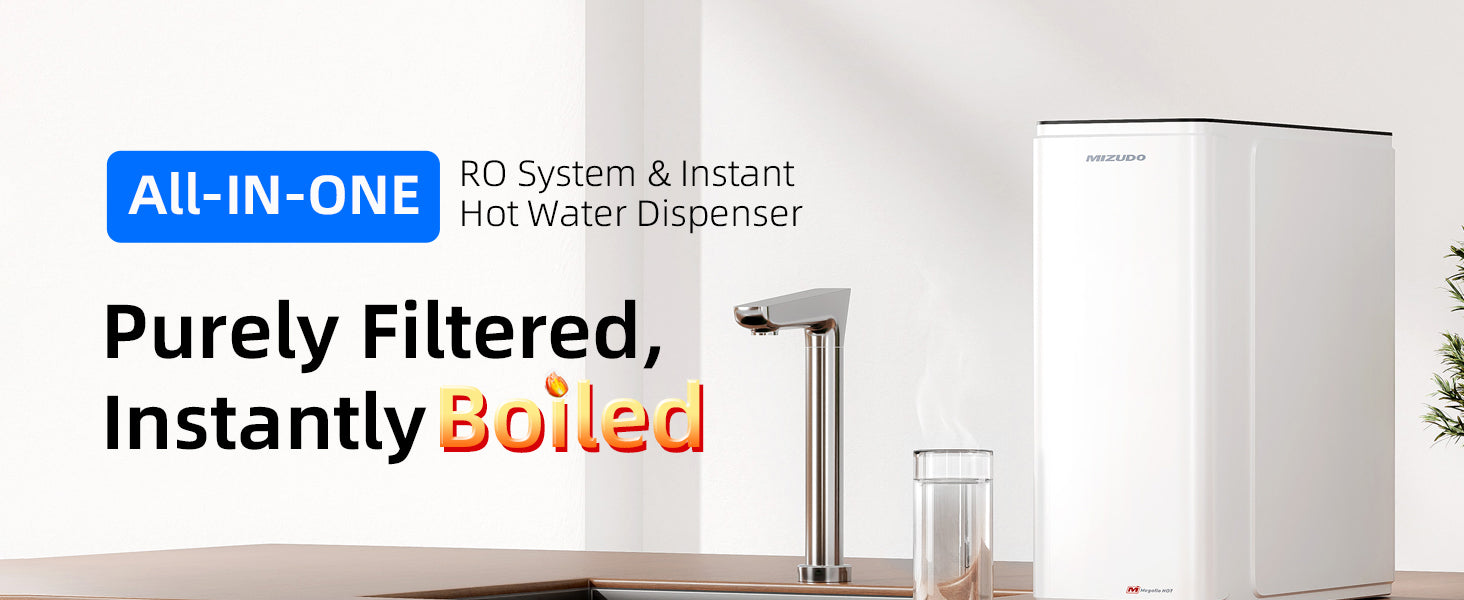
- The Renter's Solution: If drilling holes in countertops is not an option, a Portable filtered water dispenser for home is ideal. Specifically, a plug-and-play Bottleless water dispenser Countertop unit offers RO-level purification and temperature control with zero installation.
- The High-Traffic Household: To replace delivery services, the Best Bottleless water dispenser for home connects directly to your cold water line. Look for models with UV-C self-cleaning tanks and robust heating elements to handle high-volume usage.
- The Architectural Choice: For a minimalist aesthetic, a Built-in filtered water dispenser integrates into custom cabinetry. These require professional installation but offer the cleanest visual footprint.
A Direct-to-Consumer Approach to Water Quality
Finding the right balance of performance metrics, filter longevity, and upfront cost shouldn't require compromising on safety. As a direct-to-consumer brand, MIZUDO engineers and distributes our own systems. This structure allows us to utilize high-end materials—like 0.0001-micron RO membranes and premium remineralization media—while offering transparent pricing that competes directly with entry-level retail brands.
We believe in empowering consumers with data. If you want to compare the Best filtered water dispenser for home options or need help interpreting your local water quality report to find the right system, explore our technical specs at MIZUDO.com or contact our support team at service@mizudo.com.

Leave a comment
This site is protected by hCaptcha and the hCaptcha Privacy Policy and Terms of Service apply.