


Article: Do You Really Need a Water Softener for a Tankless Water Heater?
Do You Really Need a Water Softener for a Tankless Water Heater?
If you live in an area with hard water, you might be asking: do you need a water softener with a tankless water heater? The direct answer is that it depends on two main factors: the hardness level of your local water supply and the internal heating technology of your specific unit. For traditional copper-based heaters in areas with severe hard water, a softening system is often highly recommended to prevent rapid scale buildup. However, modern units designed with scale-resistant materials can help reduce this risk, offering an alternative approach to managing hard water without necessarily requiring an immediate softener installation.
How Hard Water and Scale Buildup Affect Your Plumbing
Hard water contains high concentrations of dissolved minerals, primarily calcium and magnesium. While safe for daily use, these minerals undergo a physical change when exposed to rapid temperature increases. Inside a water heater, the intense heat causes the minerals to crystallize and cling to internal surfaces, forming a tough, white scale. Over time, this scale buildup can restrict water flow, force the system to work harder, and decrease the overall energy efficiency of your home's hot water supply.
When Is a Water Softener System for a Tankless Water Heater Necessary?
According to the Water Quality Association, water above 7 grains per gallon, or about 120 ppm, is generally considered hard. If your home’s water tests in this range or higher, installing a dedicated water softening system is a traditional and effective way to protect your plumbing. By using an ion-exchange process to remove the hardness minerals before they enter your appliances, a softener can help maintain the efficiency of standard copper heat exchangers.
The Pros and Cons of a Water Softener Tankless Water Heater Combo
Many homeowners consider investing in a water softener tankless water heater combo to ensure comprehensive protection. The primary benefit of this setup is that it protects not just your water heater, but also your dishwashers, washing machines, and showerheads from mineral deposits. However, the drawbacks include a significant upfront installation cost, the indoor floor space required for the brine tanks, and the ongoing monthly expenses of purchasing specialized salt and increased water usage during regeneration cycles.
Cast Aluminum Heating Elements: A Smarter Choice for Indoor Installations
If you are looking for alternatives to a whole-house softening system, the internal components of your water heater matter immensely. Traditional units rely on narrow copper tubes, which conduct heat very quickly but can create intense localized "hot spots." These hot spots are exactly where scale is most likely to crystallize rapidly.
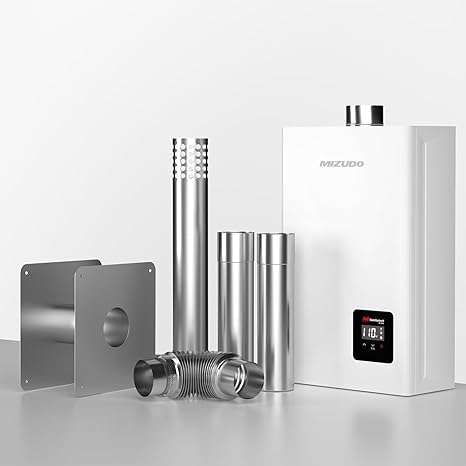
Mizudo electric tankless water heaters, designed specifically for convenient indoor installation, take a different engineering approach. Instead of traditional copper, Mizudo utilizes a Commercial-Grade Cast Aluminum Heating System. Cast aluminum provides much wider water channels and acts as a larger thermal mass, designed to promote a highly even heat distribution. By minimizing localized hot spots, this advanced design is engineered to handle hard water more effectively, which may help reduce the rate of scale accumulation over time.
Comparing the Technologies
Here is exactly how traditional copper tubes compare to cast aluminum when exposed to hard water:
| Feature | Traditional Copper Heat Exchanger | Mizudo Cast Aluminum Heating System |
|---|---|---|
| Heat Distribution | Prone to localized "hot spots" due to rapid heat transfer. | Even heat distribution across a larger thermal mass. |
| Water Channel Design | Narrow tubing, which can restrict flow if scale forms. | Wider, smoother channels designed to maintain steady water pressure. |
| Scale Resistance | Highly susceptible to rapid scale crystallization in hard water. | Designed to mitigate rapid crystallization, reducing scaling risks. |
| Hard Water Management | Often requires mandatory softening systems or frequent chemical flushing. | Can help minimize the immediate need for expensive secondary equipment. |
Finding the Right Solution for Your Home
Before making a decision, the best first step is to test your home's water hardness. If you already own a traditional copper unit and must purchase a tankless water heater softener, ensure the softener's flow rate (GPM) matches your heater's capacity to prevent pressure drops. However, if you are upgrading your heater soon, choosing a modern, scale-resistant unit like the Mizudo cast aluminum system may provide reliable performance while keeping your indoor plumbing setup simple. Investing in the right heating technology upfront can help manage risks and reduce long-term maintenance costs.
Frequently Asked Questions
Do you need a water softener with a tankless water heater?
It ultimately depends on your local water hardness and the specific heating technology inside your unit. For traditional copper heat exchangers, installing a softening system is highly recommended if your water tests above 120 PPM to help prevent rapid scale accumulation. However, it is not always a strict requirement if you choose a modern, scale-resistant alternative. Units designed with cast aluminum elements for indoor residential use can distribute heat more evenly. This technology is designed to mitigate localized hot spots, which may help reduce the risk of scaling and minimize the immediate need for extra softening equipment.
What are the signs that my tankless water heater is affected by hard water?
If your system is struggling with scale buildup, you may notice several common indicators. A gradual or sudden drop in water pressure is frequently the first sign, as mineral deposits restrict the internal pathways. Additionally, your unit might display error codes related to overheating or flow sensors. You may also observe that the water takes much longer to heat up. Regular monitoring of these signs can help you address scale issues early.
Does a salt-free water conditioner work as well as a traditional water softener?
Salt-free water conditioners do not actually remove calcium and magnesium from your water supply. Instead, they alter the chemical structure of the minerals, which is designed to prevent them from adhering to the internal surfaces of your pipes. While they are a popular, low-maintenance alternative to salt-based systems, their effectiveness can vary depending on your specific water chemistry. For extremely hard water, a traditional ion-exchange softener may provide more comprehensive protection.
How does cast aluminum technology help with hard water compared to copper?
The primary difference lies in how the materials distribute heat. Traditional copper heat exchangers feature narrow channels that heat up very quickly, creating localized hot spots where hard water minerals rapidly crystallize and form scale. Cast aluminum systems, on the other hand, are built with wider internal channels and serve as a thermal mass. This is designed to promote a much more even heat distribution, helping to minimize extreme hot spots and reduce scaling.

Leave a comment
This site is protected by hCaptcha and the hCaptcha Privacy Policy and Terms of Service apply.