


Article: Natural Gas or Propane Tankless Water Heater? How to Choose
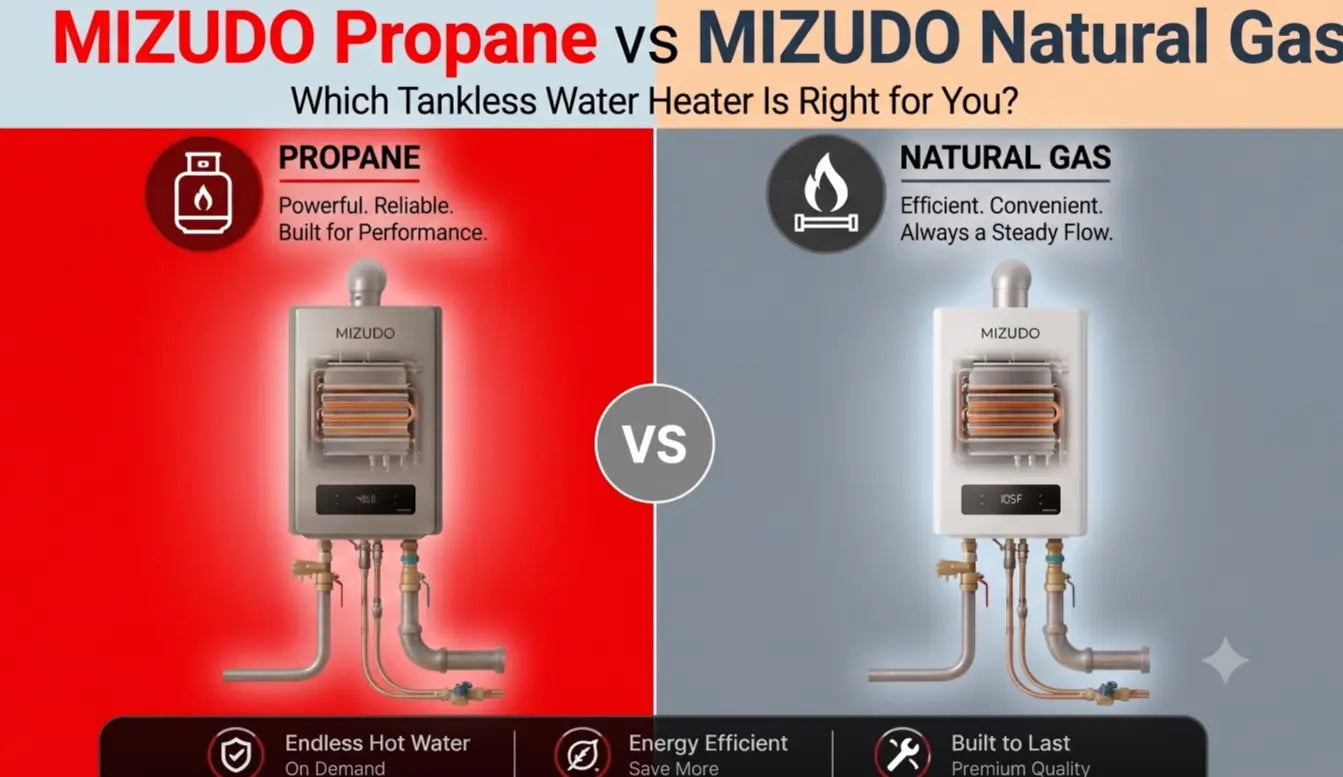
Natural Gas or Propane Tankless Water Heater? How to Choose
Choosing between a natural gas and propane tankless water heater depends on more than the fuel itself.
Your home's existing gas supply, installation location, hot water demand, venting requirements, and local fuel costs all affect which option makes sense.
Natural gas may be the more convenient choice when your home already has a suitable gas line. Propane may be more practical for homes without access to a natural gas network, especially in rural or remote areas.
The right tankless water heater should also match your household's BTU and GPM requirements. A larger number does not always mean a better choice if the installation cannot support it.
Natural Gas vs. Propane Tankless Water Heater
| What to Check | Natural Gas | Propane |
|---|---|---|
| Fuel supply | Existing utility gas line | Dedicated propane tank |
| Usually fits | Homes with natural gas service | Homes without access to natural gas |
| Main installation check | Gas line size and supply capacity | Tank, regulator, and delivery access |
| Indoor installation | Requires approved venting | Requires approved venting |
| Outdoor installation | Requires a compatible outdoor model | Requires a compatible outdoor model |
| Main planning issue | Gas line and venting work | Fuel storage and refills |
Neither fuel is automatically better for every home. The practical choice depends on the property and the available installation conditions.
When Is Natural Gas a Better Choice?
A natural gas tankless water heater uses fuel supplied through a local gas utility line. When a hot water fixture is opened, the unit activates and heats water as it flows through the heat exchanger.
Natural gas may be a practical option if your home already uses gas for cooking, heating, or other appliances. An existing gas connection can make fuel access more convenient, but the line and meter still need to support the heater's required BTU input.
Natural gas may suit your home if:
- Natural gas service is already available.
- You want a continuous utility fuel supply.
- You need hot water for several areas of the home.
- You do not want to manage a propane storage tank.
- The existing gas line can support the selected model.
Before installation, confirm the required gas pressure, line size, meter capacity, electrical supply, venting configuration, and local code requirements.
An existing natural gas connection does not automatically mean that every natural gas tankless water heater will be suitable for the property.
When Is Propane a Better Choice?
A propane tankless water heater draws fuel from a dedicated propane tank. Like a natural gas unit, it heats water only when needed instead of storing a large volume of hot water.
Propane may be more practical when a property does not have access to a natural gas network. It is often considered for rural homes, cabins, workshops, vacation properties, and other locations where utility gas service is limited.
Propane may suit your home if:
- Natural gas is not available.
- Your home already uses propane appliances.
- You live in a rural or remote area.
- You need more flexibility in fuel storage.
- A propane tank can be installed and refilled conveniently.
The propane tank, regulator, and supply line must be capable of supporting the heater's BTU input. This is especially important when several showers, faucets, or appliances may operate at the same time.
Propane can offer installation flexibility, but it also requires planning around tank placement, delivery access, refill schedules, and local safety requirements.
Does Propane Provide More Hot Water Than Natural Gas?
Not automatically.
Fuel type alone does not determine how much hot water a tankless system can provide. The main performance factors include:
- BTU input
- GPM rating
- Incoming water temperature
- Required temperature rise
- Water pressure
- Number of fixtures used simultaneously
A higher-BTU model may be more appropriate for a larger household, but its actual performance still depends on installation conditions and incoming water temperature.
When comparing a natural gas tankless water heater with a propane tankless water heater, compare the complete specifications rather than focusing only on the fuel name.
What Do BTU and GPM Mean?
BTU describes the heater's input capacity. GPM describes the amount of hot water the system is designed to deliver under specified conditions.
A smaller home with limited simultaneous use may not need the highest-flow model. A larger family may need more capacity when multiple fixtures are used together.
As a starting point:
- Around 5.1 GPM may suit smaller homes or lower simultaneous demand.
- Around 7.9 to 8.1 GPM may suit many whole-home applications.
- Around 10.3 GPM may be considered for higher-demand homes.
These figures are not a substitute for a proper sizing review. Incoming water temperature can significantly affect the amount of heating capacity required, especially in colder climates.
The number of bathrooms alone is also not enough to select a unit. The installer should consider the likely peak demand, such as two showers running while a kitchen faucet or washing machine is in use.
How Mizudo Models Compare
Mizudo offers different natural gas, propane, indoor, outdoor, and convertible configurations. The following examples show how fuel type, BTU, GPM, and installation location relate to different household situations.
| Model | Fuel | Installation | Rated Output | Suitable For |
|---|---|---|---|---|
| 5.1 GPM Convertible Model | Natural Gas / Propane | Indoor or Outdoor | 120,000 BTU | Smaller homes and flexible installations |
| 7.9 GPM Indoor Model | Natural Gas | Indoor | 180,000 BTU | Higher-demand indoor use |
| 8.1 GPM Outdoor Model | Natural Gas | Outdoor | 180,000 BTU | Outdoor natural gas installations |
| 10.3 GPM Gen 3 Model | Natural Gas / Propane | Indoor Direct Vent | 199,000 BTU | Higher-demand indoor installations |
The 5.1 GPM model may be a reasonable starting point for a smaller home or a project where indoor and outdoor installation flexibility matters.
The 7.9 GPM indoor natural gas model is designed for customers who already have natural gas service and need a higher-capacity indoor system.
The 8.1 GPM outdoor model is intended for customers comparing an outdoor natural gas installation. Placement, freeze protection, clearances, and weather exposure still need to be reviewed.
The 10.3 GPM Gen 3 model is rated at 199,000 BTU and is available in both natural gas and propane versions. It is designed for higher-demand indoor applications with a direct-vent configuration. Choose the fuel variant that matches your home's available supply.
These examples are intended to explain the selection process. The final model should be chosen based on the complete installation requirements, not GPM alone.
Indoor or Outdoor Installation
Natural gas and propane models can both be designed for indoor or outdoor installation. The fuel type does not by itself determine where the unit can be installed.
Indoor Installation
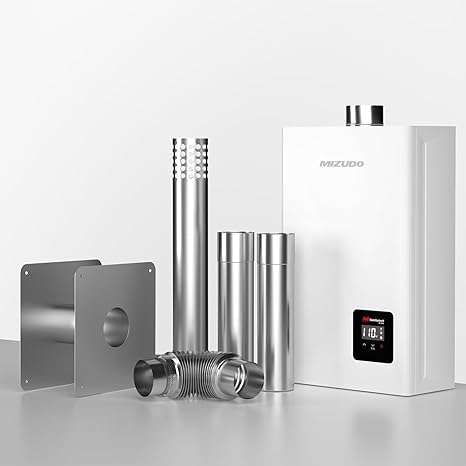
An indoor tankless water heater requires an approved venting system. Exhaust gases must be directed safely outside, and the installation must follow the product's listed venting configuration.
Before choosing an indoor model, confirm:
- Available wall space
- Vent location
- Vent pipe diameter and maximum length
- Required clearances
- Combustion air requirements
- Gas supply and electrical connection
An indoor propane tankless water heater should only be installed according to its product instructions and local code requirements.
Outdoor Installation
An outdoor tankless water heater may reduce the need for an indoor exhaust route, but it still requires careful planning.
Check:
- Freeze protection
- Weather exposure
- Required clearances
- Gas line location
- Electrical connection
- Service access
- Local installation codes
Outdoor installation may be useful when indoor space is limited, but it is not automatically suitable for every climate or property.
Natural Gas vs. Propane Tankless Water Heater Cost
The total cost includes more than the price of the fuel.
Consider:
- Water heater price
- Gas line or propane supply work
- Venting materials
- Installation labor
- Permits and inspections
- Propane tank and regulator
- Fuel delivery or utility charges
- Future maintenance
Natural gas may be convenient when a suitable utility line is already installed. However, a new gas line, meter upgrade, or additional venting work can affect the installation cost.
Propane may be more practical when natural gas service is not available, but the total cost should include tank installation, delivery fees, and refill schedules.
Local fuel prices vary widely. The most reliable comparison is to request current pricing from your local natural gas provider and propane supplier.
Avoid assuming that natural gas will always be cheaper or that propane will always cost more. The result depends on the property, fuel rates, usage, and installation requirements.
Can You Convert a Natural Gas Water Heater to Propane?
Only if the specific model is designed and approved for conversion.
Natural gas and propane operate at different pressures and require different fuel-air settings. A natural gas tankless water heater should never be connected to a propane supply without approved conversion parts and the correct installation procedure.
Before changing fuel types, confirm that:
- The model supports fuel conversion.
- The correct conversion kit is available.
- The conversion follows the manufacturer's instructions.
- Local codes allow the installation.
- A qualified professional performs and tests the conversion.
Do not assume that a natural gas model can be converted simply because both fuels are gaseous.
Which Fuel Should You Choose?
Choose Natural Gas If:
- Your home already has a suitable natural gas connection.
- You want a continuous utility fuel supply.
- You need whole-home hot water.
- You do not want to manage a propane tank.
- The existing gas line supports the required BTU input.
Choose Propane If:
- Natural gas is not available.
- Your property already uses propane.
- You live in a rural or remote area.
- You want more flexibility in fuel storage.
- The property can support a properly sized propane tank.
Consider a Convertible Model If:
- You are comparing both fuel options.
- Your installation conditions may change.
- The model specifically supports conversion.
- The conversion can be completed according to the manufacturer's requirements.
Frequently Asked Questions
Is propane better than natural gas for a tankless water heater?
Neither fuel is universally better. Natural gas may be more convenient when a suitable utility connection already exists. Propane may be more practical for homes without natural gas service. The right choice depends on fuel availability, installation conditions, local prices, and hot water demand.
Does propane provide more hot water than natural gas?
Not automatically. Hot water output depends mainly on BTU input, GPM rating, incoming water temperature, and required temperature rise. Fuel type alone does not determine the final flow rate.
Can a tankless water heater use propane?
Yes, if the unit is specifically designed for propane. A natural gas model should not be connected to a propane supply unless the manufacturer approves the conversion and the correct procedure is followed.
Is an indoor propane tankless water heater safe?
An indoor propane tankless water heater can be used safely when it is properly rated, correctly vented, and installed according to the manufacturer's instructions and local codes. Installation should be completed by a qualified professional.
Which is better for a rural home, natural gas or propane?
Propane may be more practical when a rural property does not have access to a natural gas network. Tank placement, delivery access, local climate, and BTU requirements should also be considered.
What size tankless water heater do I need for a whole house?
Start by calculating peak simultaneous water demand. Then compare the unit's GPM rating, BTU input, incoming water temperature, and installation requirements. A higher-flow model may be needed when multiple fixtures operate at the same time.
About Mizudo
Mizudo provides residential water heating and water purification solutions. Its product range includes natural gas, propane, indoor, outdoor, and convertible tankless water heaters, as well as reverse osmosis water filtration systems.
According to the Mizudo About Us page, the company focuses on comfortable and clean water solutions, follows quality systems that include ISO 9001 and ISO 14001 certifications, and provides 24/7 customer support.
Product specifications and installation requirements should always be reviewed before purchase and confirmed with a qualified installer.
Final Takeaway
The right fuel for a tankless water heater depends on your home's existing infrastructure and hot water requirements.
Natural gas may be the simpler choice when a suitable utility connection is already available. Propane can offer more flexibility for rural homes and properties without natural gas service.
Before choosing a model, compare:
- Fuel type
- BTU input
- GPM output
- Indoor or outdoor installation
- Venting requirements
- Gas pressure
- Incoming water temperature
- Simultaneous fixture demand
- Local installation codes
To compare the available configurations, visit the Mizudo gas tankless water heater collection.
Reviewed against: Current Mizudo product specifications
Updated: July 2026

Leave a comment
This site is protected by hCaptcha and the hCaptcha Privacy Policy and Terms of Service apply.